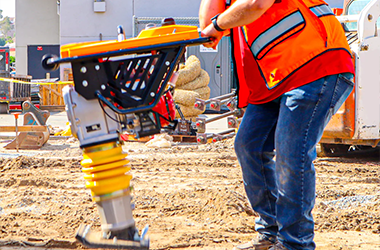

You’re Probably Running Your Plate Compactor Too Fast (I Know I Was)
Hey, it’s me, your friendly neighborhood technical sales consultant from the flooring factory. Yes, the one can’t stop talking about the tools that make our work easier.
After a long day of compaction, get a coffee or, even better, a cold drink. Let’s talk.
So, what about plate compactors? You know them. I know who they are. My knees really do know them. For a long time, I thought of these machines as the annoying cousin you have to invite to the party. They were loud, heavy, and a little scary. I thought the job was done as long as it vibrated and moved forward. It’s easy, isn’t it?
Nope. I was a fool.
Let me take you back to a job I had about three years ago. We were getting ready to pour a lot of industrial flooring on a big base. It was very strict, like “the client is a perfectionist who will be here with a straightedge and a flashlight” strict. My crew was in charge of the plate compactor. Done. And over. And over again. We thought we were doing great.
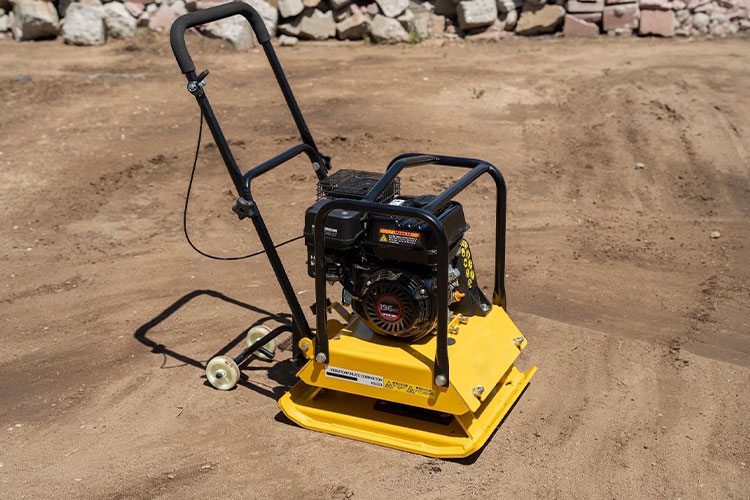
At the end of the day, I’m looking at the base. It looked strong. But my gut was bothering me. Something didn’t seem right.
The general superintendent comes over the next morning. An old-school guy who’s been around longer than I’ve been alive. He looks at us for about 30 seconds before waving me over.
“Son,” he says (I love when they call me son, even though I was 30), “you’re just giving that ground a massage.” You want to marry it, not just go out with it.
After that, he showed me something so easy that I wanted to hit myself. He said that we were running the machine in random passes that overlapped by about an inch and at a speed that felt like it was getting things done but was really just skimming the surface.
His solution? Take it easy. At least half of the plate width should be covered. So, here’s the “aha!” moment: don’t use the compactor like a lawnmower. You don’t just go back and forth. You do a pass and then a pass that goes across. That cross-pattern holds the aggregate together in a way that a single direction never will.
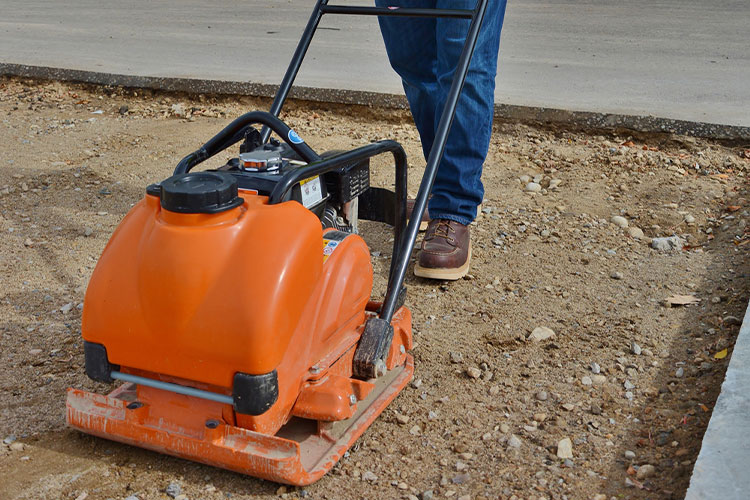
That was my “duh” moment.
As a guy who sells this stuff, I could just tell you to get the biggest, baddest machine we have. But that’s boring, and to be honest, it’s not always the right answer. The real trick to getting more done is not horsepower; it’s technique.
Here’s what I really learned that day and what I keep telling my customers:
Overlap like you mean it.
That overlap of half a plate isn’t wasting time. It’s making sure that your base doesn’t have a “soft seam” running through it. Your concrete or asphalt will crack along those seams later. Then you call me crying about how much it costs to fix it. Don’t be that person.
Let the machine do its job.
I used to push the plate compactor like I was in a race. Stop. Let the vibrating plate do its thing. You might be going too fast if you’re walking at a normal pace. The energy goes down into the soil, not just across the top, when you make slow, controlled passes. It’s like cooking a steak: slowly and low (not low, but you get the idea). Let it cook.
Moisture is both a friend and an enemy.
I learned this the hard way when I tried to compact a dry, dusty sub-base. We ran that thing for two hours, and it looked like a dust storm in the desert. The plate was just moving around on the dust. I got a garden hose and gave it a light soak. It wasn’t a mud pit, just damp. The next time I went over it, it was like magic. You’re just tickling the material if it doesn’t have a little bit of stickiness.
Look at the machine, not the manual.
It’s good to have manuals for safety, but your machine will let you know when it’s done. You can tell by the sound that it changes. The vibration feels more solid. The machine stops bouncing and starts to hum. You’re done when it feels like it’s part of the ground. You’ve still got work to do if it’s still bouncing and chattering.
I work in a factory all day talking about polymers and resin blends for floors. But none of that fancy chemistry matters if the base under the floor isn’t bulletproof. To build a good floor, you need to start with a good base. To build a good base, you need to respect that loud, grumpy plate compactor.
So the next time you’re on site, don’t just walk back and forth while you think about what to eat. Respect it. Take it easy. Cross over. Overlap.
Your lower back and your future self will thank you.
Do you have a scary story about a compactor? Or a “duh” moment of your own? Put it in the comments. I’ll be here, probably looking at a pile of aggregate and overthinking it.