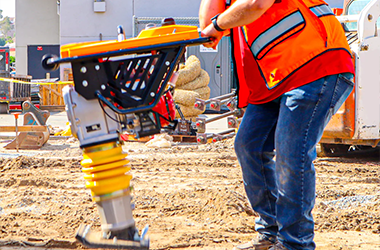

The Day I Realized How Much We Don’t Appreciate Mobile Light Towers
That “oh crap” moment that made everything different
You know how sometimes something so simple hits you like a ton of bricks?
I had one last month.
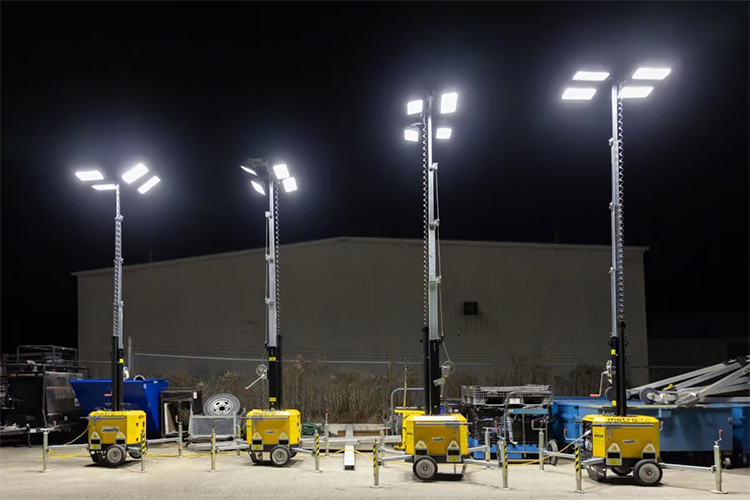
It was December and I was standing on a warehouse job site at 6:47 PM. You know how it gets—dark by five. The crew was in a hurry to finish a floor patch because the client needed the space to be ready to use by 7 AM the next day. And you know what? The building didn’t have any power yet. None. Not one.
The foreman looked at me with tired eyes and said, “I guess we’re done for today.”
And that’s when it all made sense.
We act like mobile light towers are just… extras. “Oh, yeah, we have a few lights around here.” But at that moment, standing in the dark with a floor that was only half-finished and would be rock hard and ruined by morning? That $8,000 piece of equipment suddenly seemed like the most important thing on Earth.
For five years now, I’ve worked in this field. I’ve sold floors, done repairs, and put on coatings. But I never really understood the lighting issue until I saw a crew pack up and lose a whole night’s work because no one thought about the sun going down.
Why floor guys always have to work in the dark
Here’s something no one tells you about working on the floor: the schedule never respects daylight.
No joke. When was the last time a client said, “Oh, take your time, do it during business hours, there’s no rush”? Not ever, right? They wanted it done yesterday. They want it done when they’re not open. That means nights. The weekends. The hours when most people are sleeping.
And concrete doesn’t wait. You mix it, put it down, and then you better finish it. The clock is ticking, whether you can see it or not.
I remember a parking garage job I worked on a couple of years ago. A big contract, nice polished concrete, and everything else. They planned everything perfectly, from the grinding to the densifier to the polishing. Everything but… yeah. They began late one afternoon, planning to be done by 8. After three hours, they saw that the color wasn’t working right and they had to coat it again. It’s 10 PM by then, and it’s pitch black outside. They’re trying to work with drop lights and extension cords that keep tripping everyone.
Two men fell. One almost walked into a wet edge. A complete disaster.
It would have cost them a lot less to build a real light tower than to do it over.
The things that no one tells you about lighting a job site
Okay, this is where I get a little nerdy. Sorry ahead of time.
When I first got into this line of work, I thought light was just light. You can see it when you turn it on, right? Not true. That’s not right.
People don’t talk about this thing called light temperature. When you turn on cheap lights, they give off this strange yellowish glow that changes the way everything looks. You think your patch is a perfect match, but when you wake up in the morning, it’s three shades off. I can’t even count how many times I’ve seen it happen.
These days, the best mobile light towers are around 5000 Kelvin, which is the sweet spot. It’s pretty much daytime. What you see at 2 AM is what the client will see at 9 AM. No surprises.
Also, and I learned this the hard way, not all lights are made to work in concrete dust. The filters couldn’t handle the silica, so I saw a brand new set of lights die in three months. It looked like a desert storm had hit the inside. The maker said, “These aren’t rated for construction sites,” and I thought, “Then who are they for?” Parties on the beach?
The phone call at 9 PM that made it all worth it
So, yeah, I’m that guy now. The person who asks “What’s your lighting situation?” first. My coworkers make fun of me for it. “Here comes the guy who sells light bulbs,” they joke.
Whatever. Let them make fun of you.
A regular customer called me last week at 9 PM, and they were scared. They couldn’t get their lights to work, they had a 10,000-square-foot pour drying, and the crew was standing around with flashlights on their phones like they were on a camping trip.
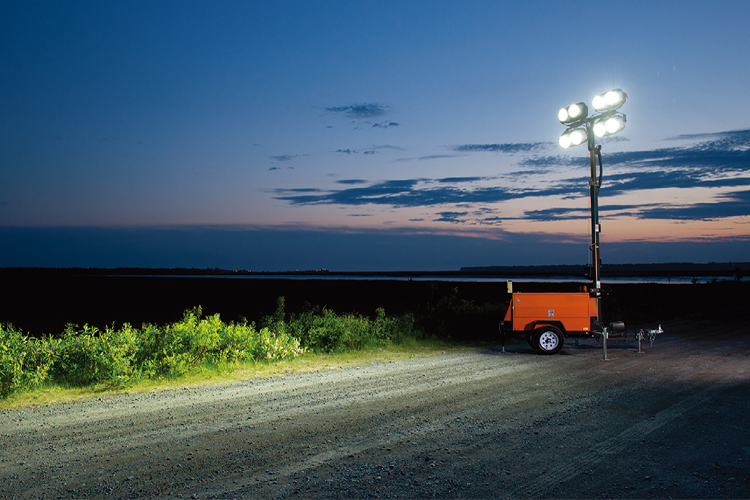
That night, I didn’t sell him anything. I just talked him through the prime and bleed procedure over the phone (air in the lines happens all the time), and ten minutes later they were back in business.
He sent me a text later that said, “You saved our asses.”
No way, man. The light tower saved your lives. I just happened to know how it works.
Three things I want every crew to know about lights
- Choose between diesel and battery.
I will say that battery stuff is getting better. They don’t make any noise or fumes, so you can use them inside without worrying about carbon monoxide poisoning. But if you really push them, they still don’t last all night. Diesel is loud and smells bad, but it will keep going until you pass out from exhaustion. Choose based on your job, not on how cool it looks.
- The height of the mast is a lie
Some companies get really creative with their specs. “30-foot mast!” they yell. Sure, if you measure from the base to the very tip and there is no wind and you are on a ladder. Let’s be honest: a 20-foot mast that doesn’t move is better than a 30-foot mast that does every time someone walks by. I’ve seen towers fall over. It doesn’t look good.
- LEDs changed everything
I know I sound like an old man, but you kids don’t know how lucky you are. The old metal halide lights took a long time to warm up, used a lot of fuel, and if you bumped them the wrong way, the bulb would blow up. LEDs turn on right away, last a long time, and you can point them where you need light instead of just flooding everything.
What I tell my clients now
I sell floors, okay? That’s what I do. But I’ve learned that the best way to make customers happy isn’t just to sell them good materials; it’s also to help them not mess up the installation.
And not being able to see what you’re doing is the quickest way to mess up an installation.
So here’s my pitch, and it’s not even a sales pitch: When you’re bidding on a job, especially one that needs to be done in the winter, inside without power, or with a short deadline, make sure to include lighting as a line item. I don’t care if you rent it, buy it, or borrow it. Just don’t come without it.
Because concrete doesn’t wait for anyone. The dark doesn’t either.