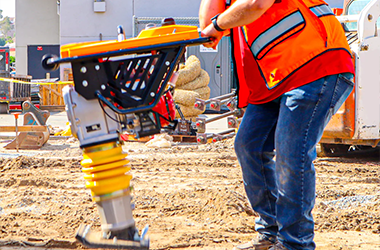

Where I Actually Learned What a Tamping Rammer Is For
I wanted to talk to you about the tamping rammer, which I completely misunderstood when I first started in this business five years ago.
When I first started working in sales at our factory, I thought these machines were kind of boring. You know? I would see them on the floor and think, “Okay, it’s just a big thing that goes up and down.” Who cares?
I was so wrong.
About two years into my job, I had a “aha!” moment. A customer called me because his new rammer wasn’t working right. I get there, and he’s trying to use it in a huge, wide-open parking lot. He’s angry, sweaty, and the machine is bouncing around like a jackhammer, barely making a dent.
I looked at the ground, then at the machine, and finally at the big 10-ton roller that was sitting still next to the trailer.
It made sense.
I asked, “Why aren’t you using the roller for this?”
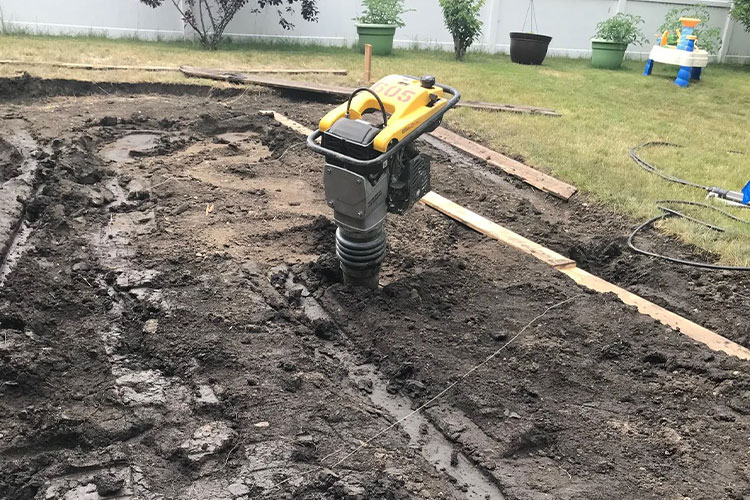
He just laughed and pointed to the edges of the lot, which were right next to the building’s foundation, the manhole covers, and the narrow curb lines. The roller couldn’t get closer than three feet to any of it. That’s where the rammer made his home.
That’s the secret. You don’t use a rammer to do everything. You use it to finish the job that the big guys can’t.
So, what is this thing really good at?
The “Trench Terror” (in a good way)
You are digging a trench if you are working on any kind of utility line, like water lines, gas lines, or fiber optic cable. You put down your pipe or cable, and then you have to put the dirt back. You can’t just put it on top and leave it there. It will settle later and break your sidewalk or driveway.
You need to compact it in layers. A big plate compactor works well in open spaces, but what about inside a 2-foot-wide trench? It doesn’t work. It gets stuck. It’s a pain.
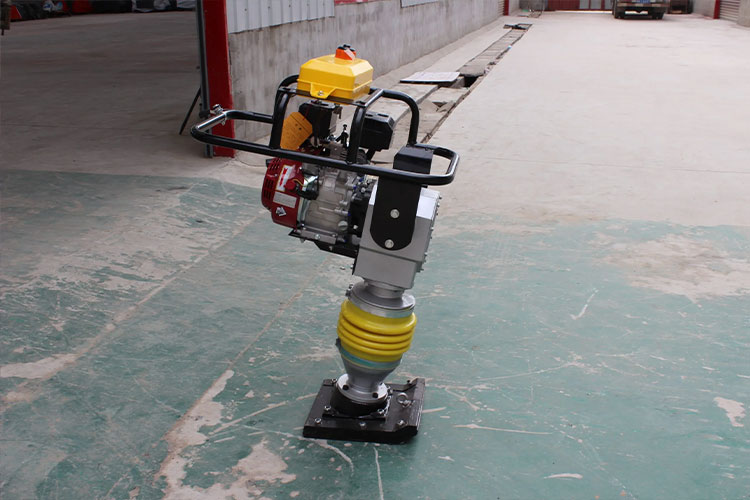
The rammer is thin. It should go down into that hole and really hurt the dirt so that future sinkholes don’t happen. I’ve seen guys try to use hand tampers for this, and they come home with backs that feel like they’re 90 years old. The rammer does the hard work for you.
The “I Hate Your Curb” Area
Do you remember what I told you about the parking lot? That’s the usual way to use it. The big ride-on rollers don’t work on any vertical surface, like a foundation wall, a curb, a column, or the edge of a pool. They’re too big and heavy to get close to without breaking something.
The rammer is the tool you use to be exact. You walk it right along that edge, packing the dirt down so that water can’t get under the foundation later and cause erosion. It’s the difference between a job that looks good for a month and one that lasts for years.
The “Blues in the Backyard”
Have you ever tried to fit a big machine through a gate that was only three feet wide? You don’t. You either dig up the fence or use the right tool.
The rammer is your best friend when it comes to patios, walkways, and small garden sheds. It can fit through most gates because it is narrow, and it is strong enough to compact the base for those nice paving stones. I did this myself for a small patio at my house. Three years later, it’s still level. My neighbor hit something with a piece of wood and a sledgehammer. Now, his patio looks like a roller coaster.
I learned the hard way that this is the truth:
It’s not about the biggest machine or the most horsepower. It’s about having the right tool for the job. The rammer is for the spots.
Don’t think of the rammer as the main event the next time you look for a job. Consider it the cleanup hitter. The person you hire to finish the job right, even in the hard-to-reach, annoying places that the big machines don’t bother with.
Do you have any scary stories about using the wrong tool in a tight space? I’d love to hear them (believe me, I have a lot of my own).