
Why I Can’t Stop Staring at Fresh Pavement (And You Should Too)
The “Stuck in Traffic” Moment
So, I was driving through this construction zone the other day—you know, one of those stretches where you’re stuck behind a slow-moving truck for miles—and I had one of those random “aha” moments.
I was staring at this massive highway they were pouring, and I saw these little machines buzzing around on the fresh concrete. They looked like giant robo-turtles spinning around in circles. And it hit me: that’s us. That’s what we do.
Wait, It’s Not Just a Finishing Tool?
I sell these things. I talk about power trowels every single day. But watching them from my car, stuck in traffic, I realized I’ve never really explained to you guys why they actually matter. Not the spec sheet stuff, but the real “why.”
When I first started in this business five years ago, I thought a power trowel was just a fancy way to make concrete smooth. Pretty surface, nice finish, right? Wrong.
The Day a Contractor Set Me Straight
I remember visiting a job site early on. A friend of a friend was paving a long driveway—basically a mini road—and he was having a terrible day. He pointed at this huge slab they’d just poured and said, “Look, it looks fine now, but if I don’t get this right, it’s gonna dust up in a year. Cracks everywhere.”
That’s when I got it.
The “Shoving Rocks Down” Secret
A power trowel isn’t just a “smoother.” On a road, it’s the thing that shoves the rocks down. You’ve got your concrete mix—cement, sand, gravel. When you pour it, all the heavy stones sink. If you just let it be, you get a rough, rocky top. That road surface will wear out fast, tires will hate it, and water will sit in all the little divots.
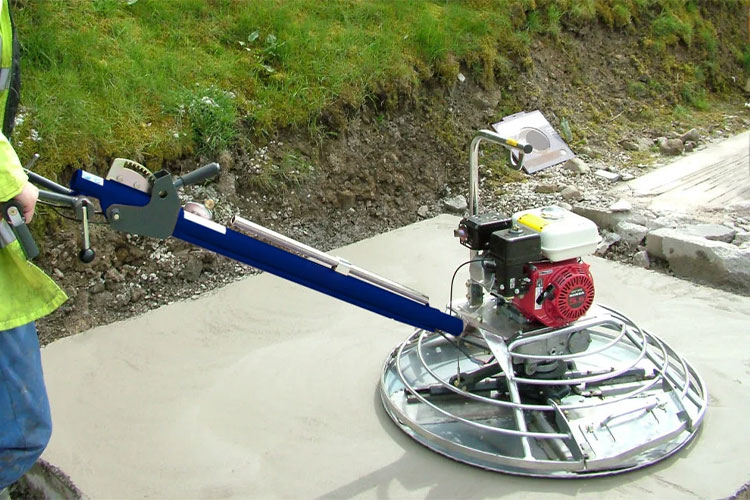
The trowel—especially those big ride-on ones we mess with—spins and flattens the surface, but the magic trick is it forces the “cream” (the fine cement paste) to the top. It seals the deal. It makes the surface dense and hard.
Why Hand-Finishing Made Me Wince
I had another “oh duh” moment when I saw a crew trying to hand-finish a small patch on a country road. They were on their knees with hand tools, baking in the sun. It took forever, and honestly? It looked lumpy. My back hurt just watching them.
The Moisture Locking Trick
That’s when I realized the real reason we use these machines. It’s not just about looks. It’s about locking the moisture in. If you don’t seal the surface fast enough, the water evaporates too quickly. The concrete shrinks. And bam—crazing cracks everywhere. It looks like a spiderweb. Ugly, and weak.
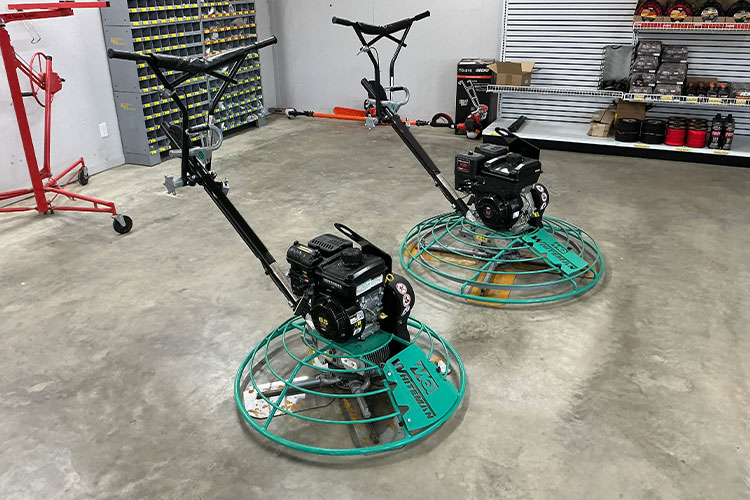
A power trowel, because it works fast and puts even pressure, keeps that moisture where it needs to be while the concrete hardens. It buys you time to get it perfect.
The Final Boss of Road Building
So yeah, when I’m sitting in traffic, staring at a highway, I’m not just seeing a road. I’m seeing the last machine that touched it before it became “done.” The trowel is the final boss. It decides if that road is going to be a smooth ride for the next ten years, or a bumpy mess that shakes your coffee out of the cup holder.
Honestly, it kind of ruined road trips for me. Now I’m just staring at the pavement judging the finish. “Nice pan float,” I’ll mumble to myself, while my wife just shakes her head.
Anyway, next time you see one of those machines spinning around on a fresh road, just know it’s not just polishing it. It’s arm-wrestling the rocks into place so you don’t have to feel them later.
Happy paving, folks. Or… happy floating? You know what I mean.