
Using a Plate Compactor for Construction: What to Look For
Hey guys,
So you have a plate compactor on site or you are thinking of hiring one. I’ve been in the flooring and construction game for about 5 years now working at our factory and I’ve seen more screwed up subgrades than I can count And you know what? Most of those screw-ups started with someone abusing a plate compactor.
I’m not here to give you a textbook lecture. Just want to share some “why didn’t anyone tell me this” moments of real jobs. Because frankly, one of these machines looks dead simple, push it, let it shake, but there’s some sneaky stuff that will bite you later.
The “looks flat” trap
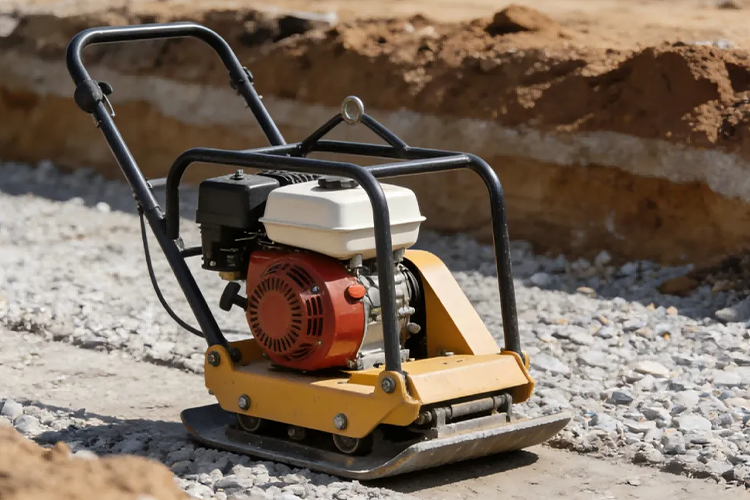
You drag the plate over some gravel or dirt. Looks good and flat. You get through it. You come back a week later and there’s a soft spot that sinks two inches when you walk on it.
What I learned the hard way: a plate compactor doesn’t turn everything into rock-solid concrete. If your base layer is uneven (thicker in one spot, thinner in another) it’ll feel firm on top but settle like crazy later. I built a small patio foundation one time, thought I was done and then my buddy drove his wheel barrow over it and left ruts in it. I thought of throwing the compactor into the nearest ditch.
So my rule now is: scarify first. Loose the high spots, rake out the low spots, put in a thin lift (4″ max for gravel, less for soil) and compact. Again. Don’t just buzz over a lumpy mess and hope for the best.
You are driving too fast
This one cracks me up. I see guys throw the plate compactor around like they’re racing their buddy down the yard. Sure, the machine vibrates but it takes time for the particles to lock together.
Like tapping a coffee-grounds jar. Just swiping the side once does nothing. But if you hold the vibration there for a few seconds… boom, they calm down. Same concept.
A good pace? Slow walk If you are panting from jogging you are going too quickly. I tell customers to count “one Mississippi, two Mississippi” on each spot. “Overlap your passes by half a plate width. Yeah, it’s a longer process. But to recompact a bad area because you were in a rush? That is even more.
Soil moisture – the quiet killer
Damn, this one hits home. My first year on the job I was compacting some clay soil one hot day. Dust was flying all over. I thought, ‘This is nice, dry, great.’
Back after the rain. That clay was like a sponge. Then it dried up again, cracked like a desert. My boss looked at me and exhaled. Did not even utter a word. That was a worse sigh than an outcry.
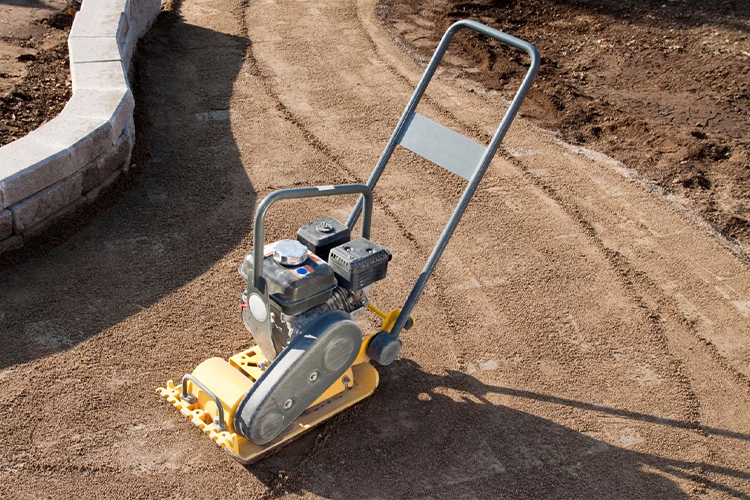
It turns out that most soils need some moisture to compact well. Too dry and the particles just slide by one another. Too wet and you get a mushy mess that never sets. The sweet spot?” When you grab a handful and it just leaves a bit of moisture on your palm, yet sticks together like a snowball.
If you don’t know, do the hand test. And don’t trust what you see; I’ve had “bone-dry” sand that compacted beautifully after a light misting. Irritating but true.
Edges and corners: the overlooked zones
The plate compactor is wide and flat. So what is 6 inches away from a wall? Nothing.” There’s no love for that area.
I saw a crew pour a concrete slab right after they compacted the middle of a trench. The edges were frayed. A month later the slab cracked right along that edge. They blamed the cement. No. It was the loose dirt that had fooled him.
you’ll need a little hand tamper or jumping jack to get into those tight spots. Or run your plate compactor as close as you can, then go back and hit the edges by hand. Irritating? Yup. But it is more frustrating to crack.
Lift rule
I see guys dump 8 or 10 inches of gravel and run the plate compactor over it. “It’s firm on top,” they say to me,
No no no. Plate compactors are good for thin lifts, 4 inches for granular and less for cohesive soil. Anything thicker and the bottom half is still loose while the top half feels hard. So you are essentially constructing a lie.
Break it up into a few lifts. Compact each one, then add the next. It doubles the work, but it also doubles your chance of not having a sinkhole next spring.
My “Aha!” Moment
I thought plate compactors were idiot-proof. So I was the idiot. After fixing enough cracked floors and sunken pavers, I finally figured it out: the compactor is a tool. It’s not wizardry. The real skill is knowing the material, checking moisture, respecting layer thickness and being patient.
Since we sell or rent compactors from our factory, I always ask: “What are you compacting and how thick? Half the time people give me funny looks. But the other half, they come back later and say thank you. That feels nice.
So yeah, use that plate compactor. Just don’t treat it as a toy. And for the love of all that is level, do the hand moisture test. You can thank me later when your floor is not cracked.
Have your own horror story? I’d love to hear that. Misery likes company.